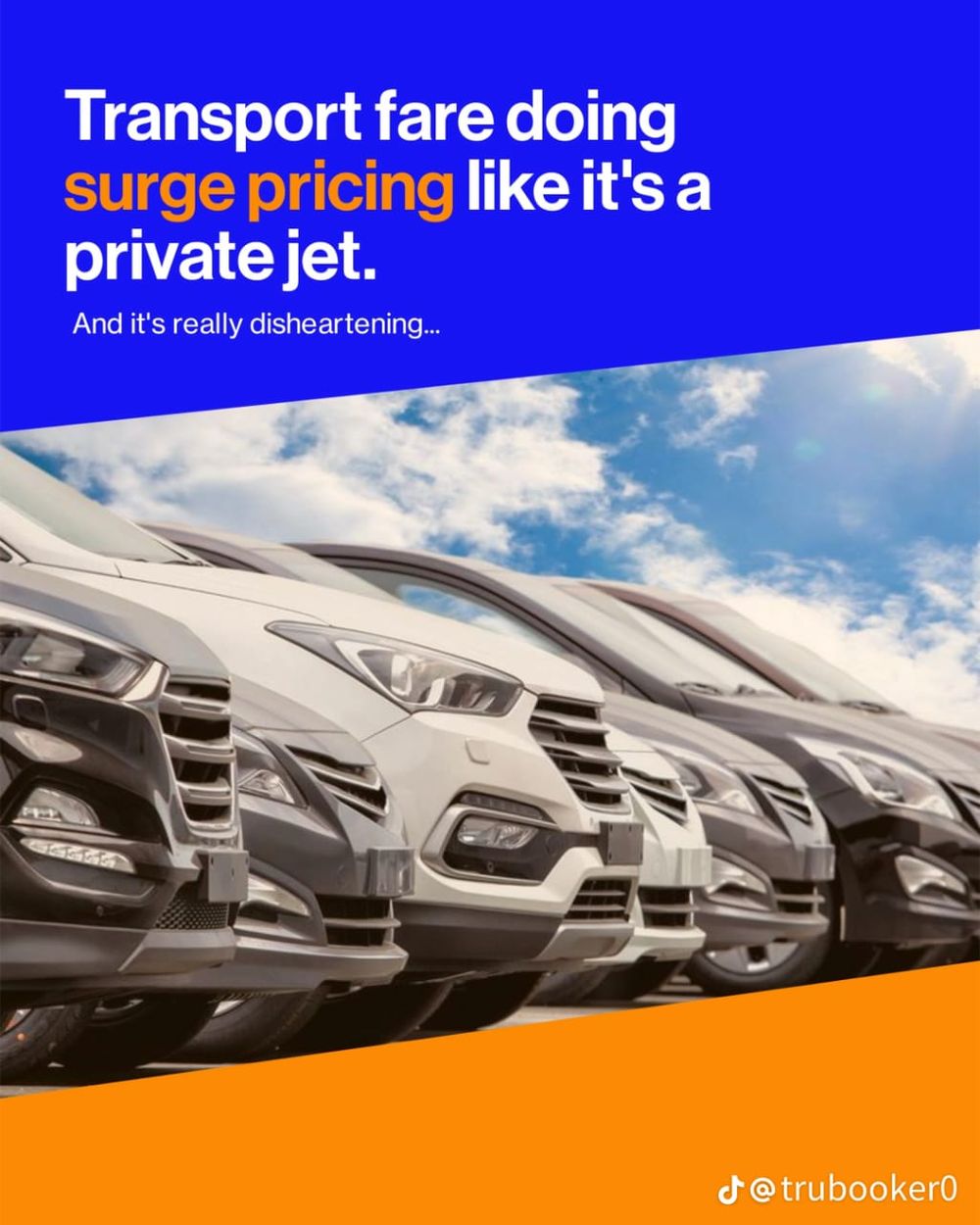
The Rising Cost of Movement in 2026 Nigeria
Anyone who has queued at a motor park in Jibowu or Utako this year knows the ritual: you ask the fare you paid last month, and the driver quotes you something else entirely. Petrol prices fluctuate, and intercity fares follow within days. The passenger absorbs the difference, every single time.
What makes this especially frustrating is how much of that cost is pure waste. On any given morning, dozens of private vehicles run the Lagos–Ibadan corridor with three empty seats apiece, while travellers stand by the roadside flagging down whatever stops. That "along-the-road" habit was never a safety strategy — it was a cost-saving measure, and it has stopped working as one.
This pressure is structural, not seasonal. Nigeria's urban population is projected to reach roughly 63.8% of the total population by 2025, which means more people competing for the same road space and the same seats.
Yet the tools to fix this are barely deployed. Lagos scores just 10.4% in technology adoption on urban mobility readiness. Meanwhile 81% of Nigerian commuters perceive ride-hailing as safer than other options, and women account for 70% of ride-hailing users. The demand for organized, digital mobility is already there. The supply is not.
Why Ride-Sharing is More Than Just Carpooling
Ride-sharing in Nigeria is frequently confused with ride-hailing, and the distinction matters enormously to your wallet. When you order a private hire car, you are buying the whole vehicle — the driver's time, the fuel, the wear on the tyres, all billed to one passenger. Route-based ride-sharing works on the opposite logic: a vehicle is already making a journey, and you are buying one seat on it.
Three differences separate organised ride-sharing from both casual lift-giving and standard on-demand hailing:
- It is route-based, not destination-based. The journey exists before you join it. A driver travelling Abuja to Kaduna posts that trip; passengers heading the same way fill the seats. Nobody is dispatched anywhere new.
- It is scheduled, not on-demand. Intercity travel rewards planning. A departure time agreed in advance lets four strangers coordinate around one vehicle rather than four separate fares.
- It creates a digital bus stop. Technology does the matching that motor parks do physically — but without the touting, the waiting, or the uncertainty about when a vehicle will finally fill up.
The economics are straightforward. Fuel and maintenance for a journey cost what they cost. Split across four passengers, each person's share falls accordingly.
Solving the Safety Crisis in Nigerian Transport
Cost alone has never been enough to persuade Nigerians into a stranger's vehicle. The deciding factor is whether you can identify who is driving, where the vehicle is going, and who to call if something goes wrong. Traditional parks offer none of that in any recorded form — the arrangement is verbal, the driver anonymous, and the journey untracked the moment the vehicle leaves.
Digital platforms invert this. Driver identities are verified before a trip is listed, vehicle details are attached to the booking, and the route can be followed live by someone who is not in the car. A journey that leaves a digital trail behaves differently from one that does not.
This perception shift is already measurable. 81% of Nigerian commuters regard ride-hailing as safer than other transport options — a striking figure in a market where informal transport still dominates.
Equally telling is that women make up 70% of ride-hailing users in Nigeria. The group with the sharpest safety concerns has moved fastest towards platforms that record who is driving and where the vehicle is.
For intercity routes, where journeys run for hours across unfamiliar stretches, round-the-clock support is what turns that verification into genuine reassurance.
The Infrastructure Gap: Technology as the Bridge
Nigeria's transport problem is not primarily a shortage of vehicles. It is a shortage of coordination. Vehicles run the same corridors daily, half-empty, with no mechanism to match them to the passengers standing at the roadside. That coordination layer is precisely what software provides — and precisely what is missing.
The scale of this gap is documented. Lagos scores only 10.4% on technology adoption within urban mobility readiness. Read pessimistically, that is a city behind the curve. Read accurately, it is a city where almost every efficiency gain available through digital matching remains untouched. Intelligent transport systems that reduce congestion through better routing and demand forecasting have barely begun to shape how Lagos moves.
Future outlook: Two shifts will compound over the coming years. The migration towards Compressed Natural Gas lowers the fuel component of every journey's cost — and when that lower cost is then split across four shared seats, the saving multiplies down to the individual passenger. Alongside it, scheduled booking suits Nigerian road conditions better than on-demand dispatch, because a trip planned the night before can be routed around known traffic patterns rather than discovered in them.
Carpooling in Nigeria doesn't need new roads to work. It needs the vehicles already on them to travel full.
How TruBooker Organises the Chaos of Intercity Travel
TruBooker operates as a marketplace rather than a fleet. It connects travellers heading in the same direction with independent vehicle owners already making that journey, turning scattered individual trips into organised shared ones.
Discovery
Rather than arriving at a park and hoping a vehicle to your destination fills before nightfall, you search routes directly. Passengers can also submit journey requests in advance, signalling demand on a corridor before a trip is listed — useful for routes that do not run hourly.
Booking
Pricing is displayed before you commit. There is no haggling at the roadside, no renegotiation once the vehicle is moving, and no discovery that the fare has risen because the driver filled his tank that morning. You see the cost of the seat, and that is the cost of the seat.
Safety
Every shared ride carries the same baseline: verified driver and vehicle details attached to the booking, live tracking so someone outside the vehicle can follow the journey, and support available throughout the trip rather than only during office hours.
Carpooling in Lagos and across longer intercity corridors works on the same principle — the vehicle is going anyway, and the seat should not travel empty.
The Bottom Line: Is Ride-Sharing Right for You?
If you travel between Nigerian cities more than occasionally, the case for shared journeys comes down to five points:
- Costs fall because they are divided. Fuel, tolls and vehicle wear are fixed for a given journey. Splitting those shared transport costs in Nigeria across four passengers reduces what each person pays, without reducing what the driver earns.
- Verified bookings change the safety equation. A journey with a recorded driver identity, attached vehicle details and a live-tracked route is fundamentally different from an anonymous roadside arrangement.
- Scheduled departures make planning possible. Knowing when a vehicle leaves — rather than waiting for one to fill — allows you to book meetings, lectures or connecting travel with confidence.
- Fewer vehicles carry more people. Organised carpooling takes half-empty cars off congested corridors by consolidating passengers who were already travelling the same way.
- The platform is the missing infrastructure. Affordable intercity travel in Nigeria depends less on new roads than on digital coordination between the seats that exist and the people who need them.
Ride-sharing suits planned journeys on established corridors. For spontaneous short hops within a city, private hire still has its place.
Embracing a More Connected Nigeria
The status quo has run out of room. Fares that track petrol prices upward, vehicles that travel three-quarters empty, and journeys arranged by verbal agreement at a roadside were tolerable when transport was cheap. In 2026, none of those things are affordable — financially or in terms of the risk passengers are asked to absorb.
What replaces it is not a new road network. It is a network of trips: drivers already travelling a corridor, passengers already needing that corridor, and a platform that puts them in the same vehicle with verified identities, a tracked route and a price agreed in advance. Every seat filled is a fare reduced, a car removed from the queue at Berger, and a journey that someone can follow from home.
Ride-sharing in Nigeria works at the scale of a community rather than an individual. The vehicle is going anyway. The question is only whether you travel alone and pay for all of it, or travel together and pay for your share.
Explore available routes on TruBooker and book your next intercity journey as a shared one.